
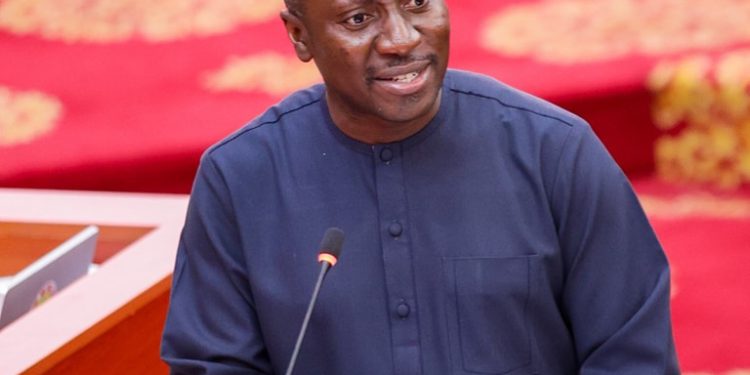
The minority caucus in Parliament, led by its leader, Osahen Alexander Afeyo-Markin, has attributed the recent strength gained by the Ghana cedi against its major trading currencies and the economic revamp to external factors, such as the International Monetary Fund (IMF) relief, rather than fiscal discipline espoused by the government.
Speaking at a press conference in Accra on Monday, January 26, the minority strongly rejected assertions that the recent gains in Ghana’s economy under President John Mahama are a result of the government’s competence.
According to the minority, there is no such thing as prudent economic management in the Mahama-led administration, which has resulted in the current economic upturn.
The minority maintain that the IMF program, debt relief, rising commodity exports, and reduced government expenditure are the key drivers of the economic improvements, not reforms or re-engineering by the current administration.
“We have been told that the economy is doing well. That is not in doubt, but the question is: is the economy doing well because there is prudent management of our economy, or is it that this government has introduced some social intervention programs that have, in themselves, created an opportunity for young, ambitious Ghanaians?”
“We hereby submit that the so-called gains were not born out of the government’s competence in the management of our economy. Rather, the IMF program, debt relief, rising commodity exports, and reduced expenditure are the major reasons for the upswing in Ghana’s economy, not a re-engineering of the economy,” he said.
Meanwhile, the Ghana cedi emerged as Africa’s best-performing currency in 2025, according to data from the International Monetary Fund (IMF) analysed across more than 20 major economies in Africa.
The IMF data shows that the cedi appreciated by more than 40 per cent against the US dollar in 2025, making it the strongest-performing currency in Africa over the period, ahead of more than 20 other African currencies tracked in the assessment.
The findings come at a time when earlier reports by some international news wires and global financial firms had ranked the Ghana cedi as the fourth-best-performing currency on the continent.
Industry players have attributed the cedi’s strong performance to policy measures implemented by the Bank of Ghana and reforms under the IMF-supported programme.
However, the minority maintains that the government shares no glory in the current strides made by the Ghana cedi.

 Ghana News Online
Leave a comment