
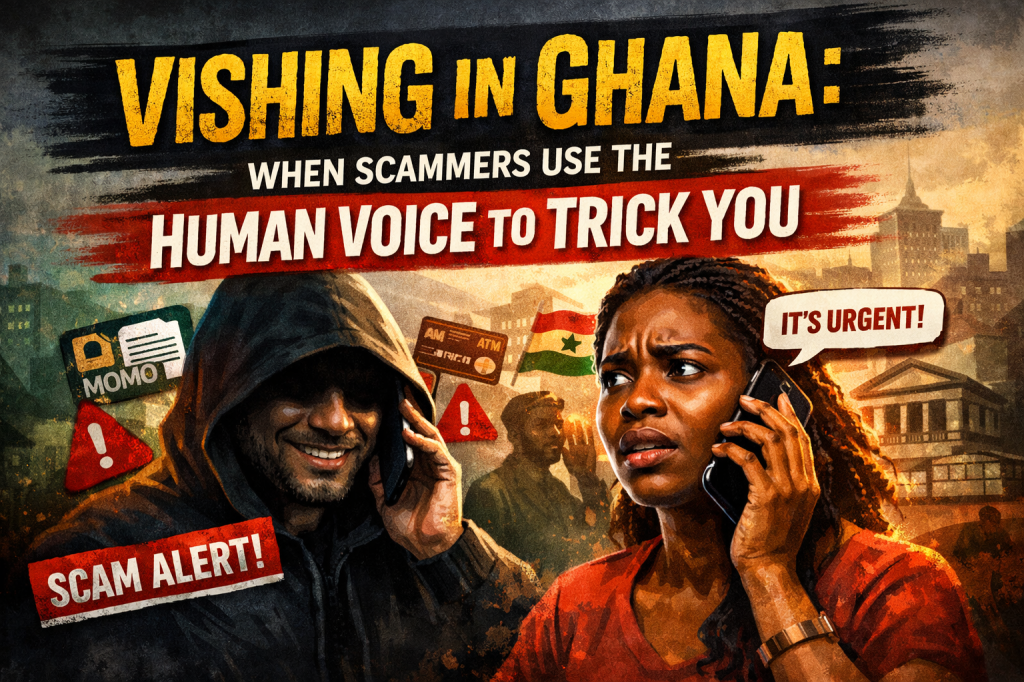
There are scams, and then there is vishing in Ghana.
Whenever an unknown number calls, pretends to be a friend or family member, and asks for money or makes urgent demands, that is vishing.
Vishing is the use of the human voice to trick people on a personal level, often with urgency designed to override judgment.
Technically, vishing (voice phishing) is a social-engineering attack where scammers use phone calls or voice notes to deceive victims into revealing sensitive information such as PINs, OTPs, and mobile money details, or into authorising fraudulent transactions.
In Ghana, almost everyone with a phone number on a major network, particularly MTN, has experienced this at least once. The number of victims could easily be in the thousands, if not millions.
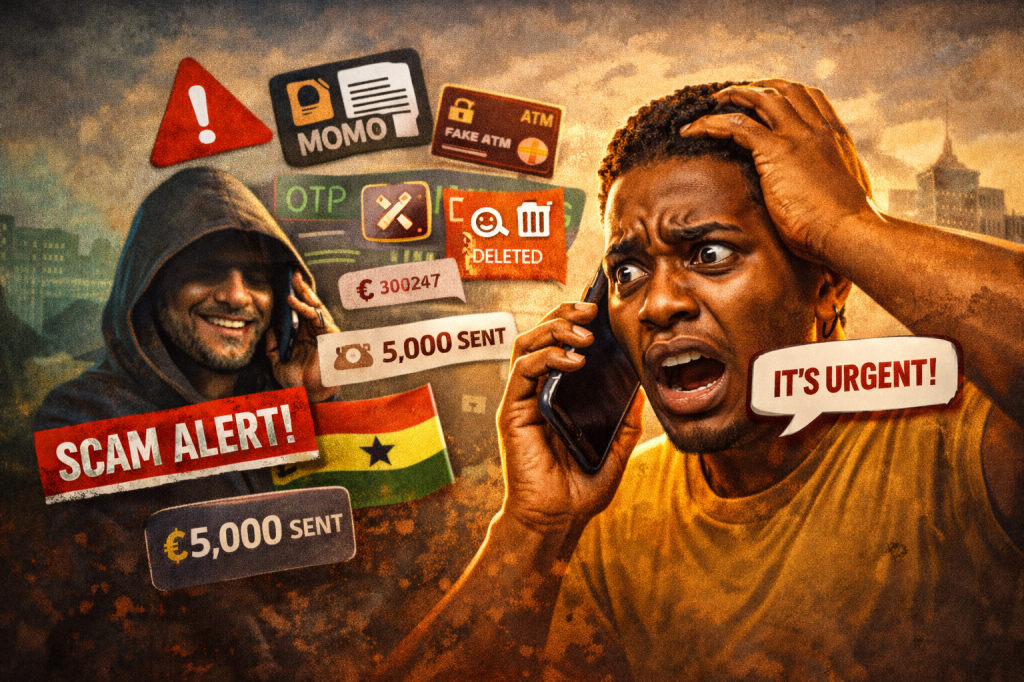
The methods vary: impersonating family members, claiming a “wrong transaction,” or posing as customer care personnel. Recently, a client handed her phone to me while a caller claimed to be MTN staff calling to reward her loyalty as a long-time user. From the brief exchange, the diction of the attacker and the flow of the questions immediately gave it away. When I asked the caller to send an email to the address linked to the Ghana Card used to register the number, the threat actor broke character entirely. It was a funny moment, but also a sobering one.
There have been multiple announcements, campaigns, and advertisements aimed at helping Ghanaians identify these scams. But how effective have they really been? How deeply has the message gone? And do people actually report scam numbers when they encounter them?
There is still hope that cybersecurity awareness in Ghana will improve. Social media increasingly serves as the main classroom, where experiences are shared in real time and lessons spread faster than any official campaign ever could.


 Ghana News Online
Leave a comment